Speakers

Plenary speaker
Prof. Gareth Roberts
University of Warwick
Brief bioHide brief bio
Gareth Roberts is a Professor in the Department of Statistics at the University of Warwick. His research spans Monte Carlo methods, stochastic processes, Bayesian inference and statistical privacy.
Talk title & abstractHide talk title & abstract
Challenges in Bayesian Privacy
Differential privacy (DP) and its generalisations have become the gold standard for assessing privacy protection of published data. This talk will discuss some of the challenges this raises for Bayesian inference. As well as considering DP, we shall also work with the more flexible and more statistically intuitive f-Differential Privacy (fDP). As Bayesian analyses often result in the generation of random samples from the posterior distribution, we begin with the basic problem of how to retain (f-)DP from publication of posterior draws while retaining as much statistical information as possible. We then consider how commonly used accept/reject algorithms (for example rejection sampling) can be equally protected in fDP. The latter work will concentrate on decentralised algorithms which use homomorphic encryption.
Joint work with Shenggang Hu, Louis Aslett, Hongsheng Dai and Murray Pollock.

Plenary speaker
Prof. Ruth Misener
Imperial College London
Brief bioHide brief bio
Ruth Misener is a Professor in the Computational Optimization Group at Imperial College London. She develops optimisation algorithms and software for industrial applications and problems connecting operations research with machine learning.
Talk title & abstractHide talk title & abstract
Bayesian optimization for mixed feature spaces using tree kernels and graph kernels
Bayesian optimization is effectively a two-step iterative process that first trains a surrogate model using continuous optimization over hyperparameter space and then optimizes the acquisition function over the search space. We investigate Bayesian optimization for mixed-feature search spaces using both tree kernels and graph kernels for Gaussian processes. With respect to trees kernels, our Bayesian Additive Regression Trees Kernel (BARK) uses tree agreement to define a posterior over sum-of-tree functions. With respect to graph kernels, our acquisition function with shortest paths encoded allows us to optimize over graphs, for instance to find the best graph structure and/or node features. We formulate both acquisition functions using mixed-integer optimization and show applications to a variety of challenges in molecular design, engineering and machine learning.
Joint work with Toby Boyne, Alexander Thebelt, Yilin Xie, Shiqiang Zhang, Jixiang Qing, Jose Folch, Robert Lee, Nathan Sudermann-Merx, David Walz, Behrang Shafei and Calvin Tsay.
Invited speaker
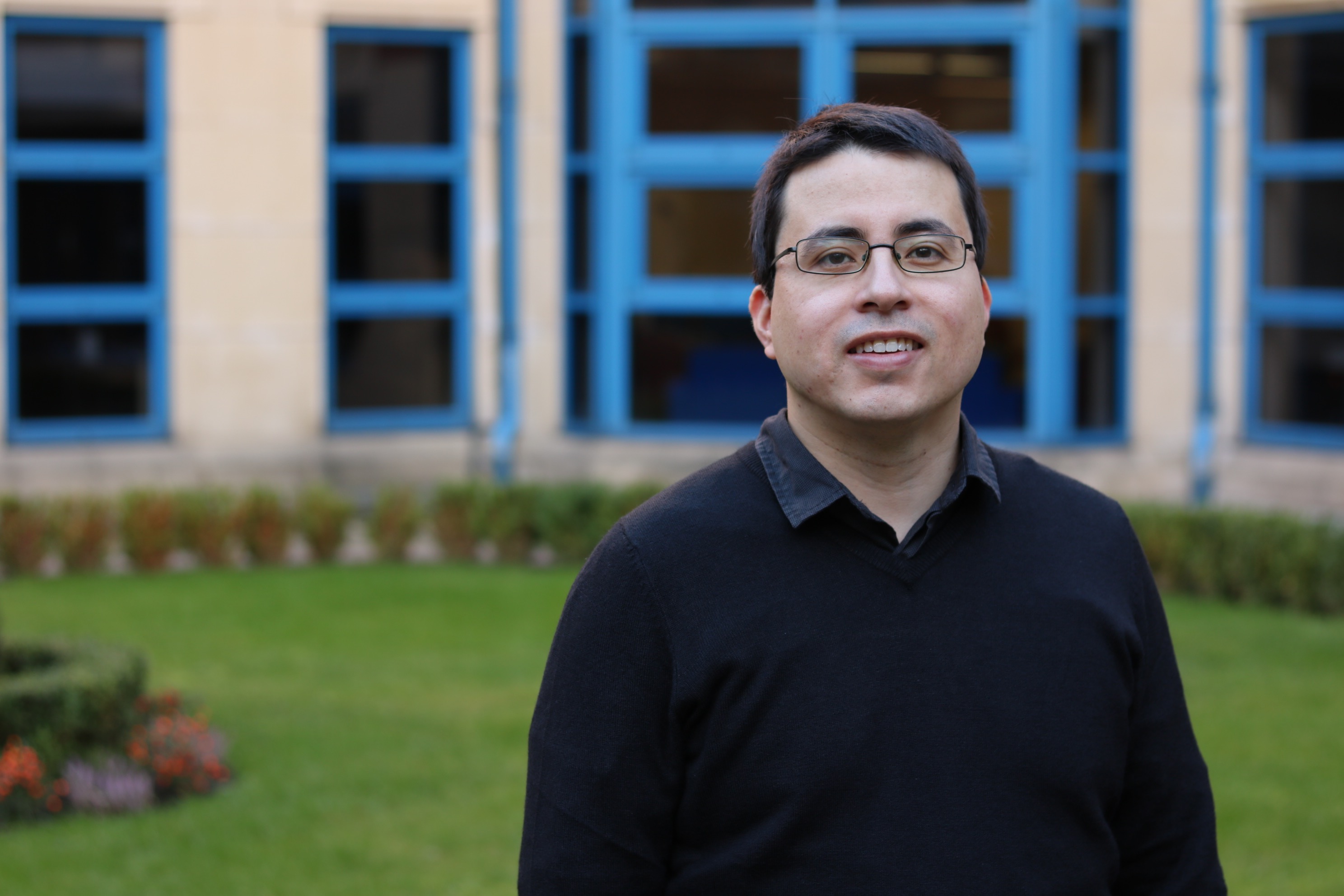
Dr. Mauricio Álvarez
University of Manchester
Brief bioHide brief bio
Mauricio Álvarez is a Reader in Machine Learning at the University of Manchester. He develops probabilistic models using kernel methods and stochastic processes, with applications in neuroscience, systems biology and robotics.
Talk title & abstractHide talk title & abstract
Advances in scalable inference for Gaussian Processes-Variational Autoencoders (GPVAEs)
Gaussian Processes (GP) Variational Autoencoders (GPVAEs) assign a GP prior over the latent space of a VAE. There are several examples in the literature showing why a GP prior helps the VAE in several representation learning tasks. However, scaling GPVAEs to long sequences is challenging. In this talk, I’ll introduce GPVAEs and discuss a recent couple of research directions in our group looking to reduce GPVAEs’ computational complexity.

Invited speaker
Prof. Christophe Andrieu
University of Bristol
Brief bioHide brief bio
Christophe Andrieu is a Professor in Statistics at the University of Bristol. He develops and analyses computational methods for statistical inference, including Markov chain Monte Carlo and particle methods.
Talk title & abstractHide talk title & abstract
Geometry informed selection in the conditional SMC sampler
The cSMC is a specialised MCMC kernel particularly suitable for inference in state-space models. We show how a simple modification of the selection procedure can lead to significant performance improvements.
Joint work with Yuan Chen.
Invited speaker
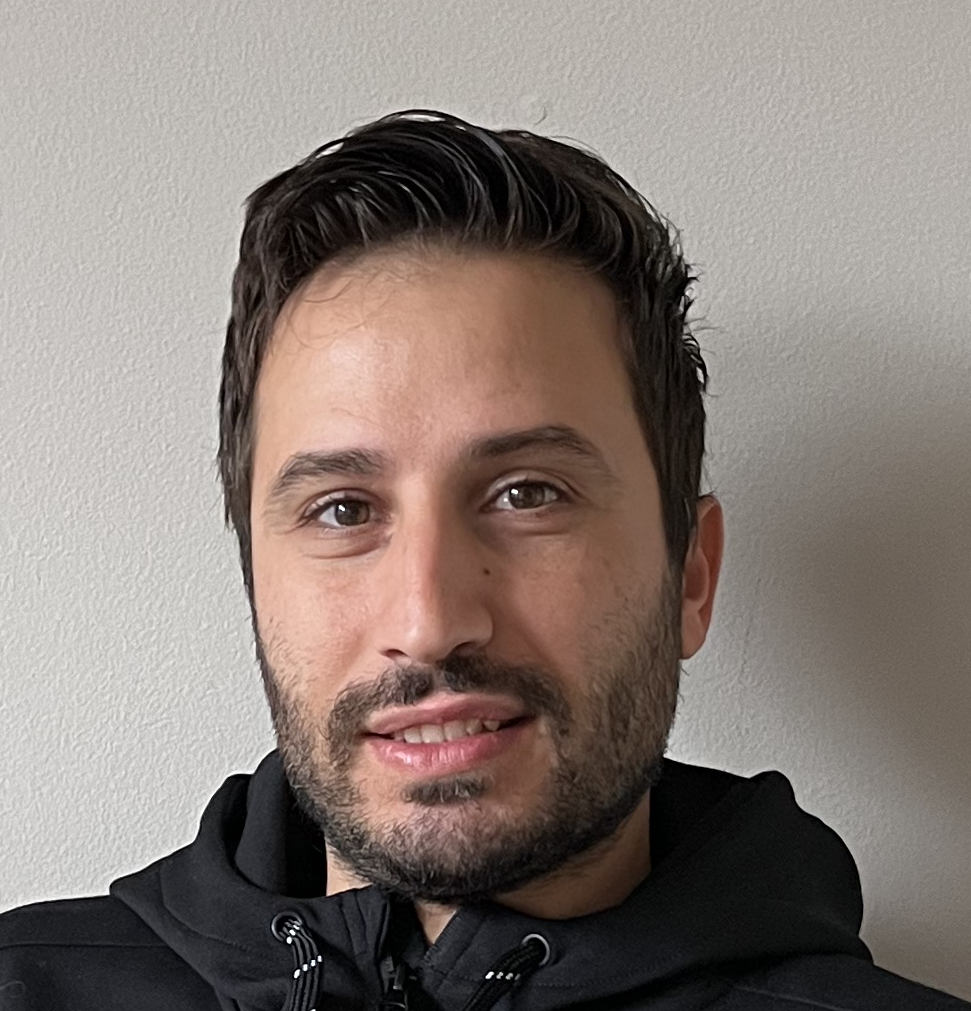
Dr. Paris Giampouras
University of Warwick
Brief bioHide brief bio
Paris Giampouras is an Assistant Professor of Machine Learning and AI at the University of Warwick. His research combines optimisation, probabilistic inference and representation learning to develop generative models and adaptive AI systems.
Talk title & abstractHide talk title & abstract
Semantic Alignment for Robust Representations in Deep Generative Models
Deep generative models learn rich representations of complex data and have emerged as powerful priors for conditional generation and inverse problems. Reliably using these representations, however, requires more than generating realistic samples: the extracted representation must capture the semantic structure of the unknown signal, while the resulting reconstruction remains consistent with the conditioning information or available measurements. This talk studies reliable representation extraction for inverse problems with deep generative models through semantic alignment at inference time.
I will introduce Align & Invert, an inference-time method that guides diffusion- and flow-based inverse solvers by aligning their internal representations with semantic features from pretrained encoders. Because the clean target is unavailable, the method constructs and iteratively refines a proxy for its semantic representation. This guidance improves perceptual reconstruction quality and reduces the number of sampling steps without compromising measurement consistency. I will also discuss theoretical connections between representation alignment, distribution matching, and contraction toward the clean latent representation. Finally, I will show empirical results validating the benefits of our approach on various inverse imaging problems.
Invited speaker
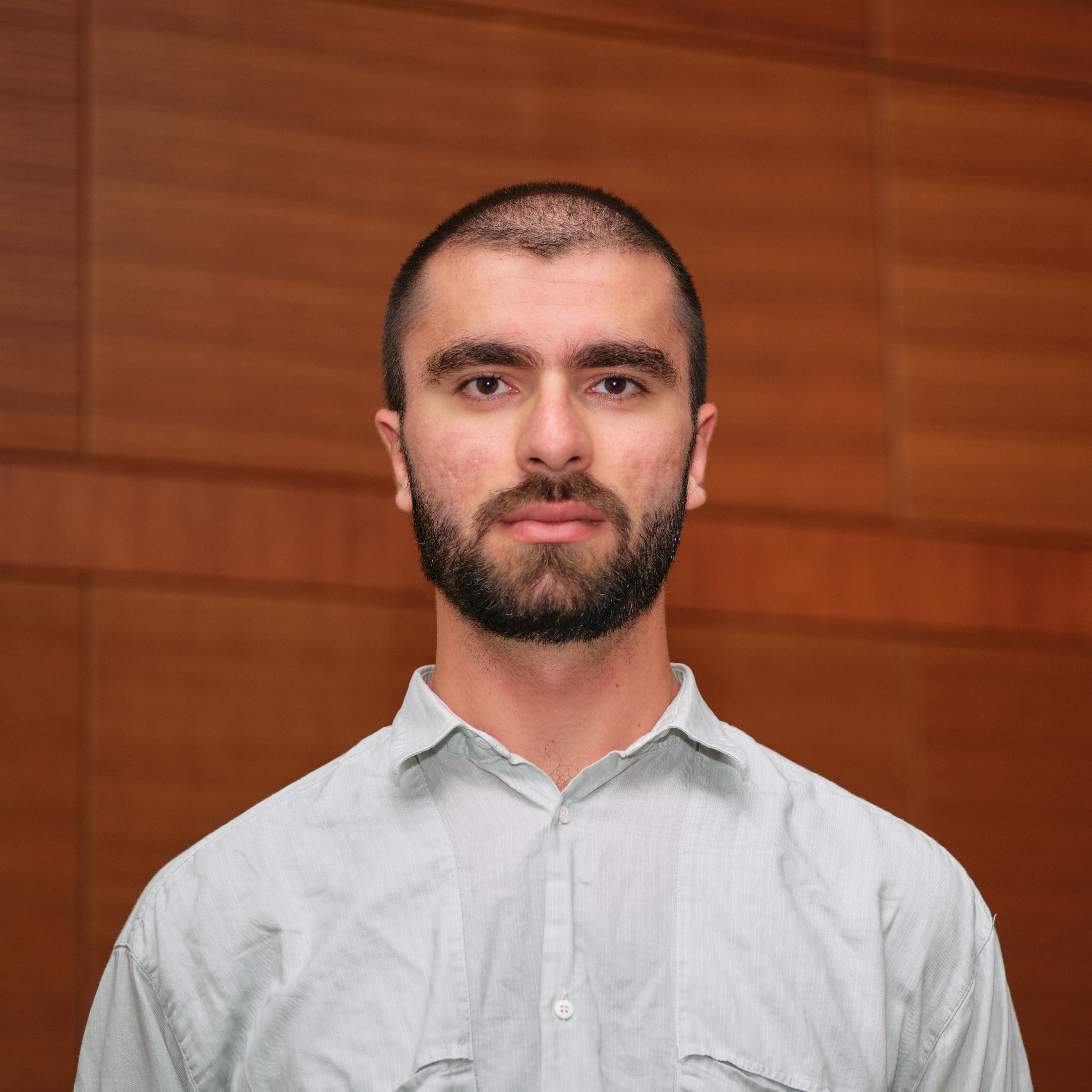
Dr. Avetik Karagulyan
CNRS/L2S
Brief bioHide brief bio
Avetik Karagulyan is a Research Scientist at CNRS, based at the Laboratoire des Signaux et Systèmes (L2S). His research focuses on sampling methods and their connections to optimisation.
Talk title & abstractHide talk title & abstract
Improved Guarantees for Langevin Monte Carlo with Average Smoothness
We establish improved nonasymptotic bounds for Langevin Monte Carlo in the strongly log-concave setting, when the error is measured by the Wasserstein distance. The main result shows that the discretization error is governed by an average coordinate-wise smoothness constant, rather than by the usual global smoothness constant. The proof is short and probabilistic, and relies on a refined use of the synchronous coupling. We further show that the same ideas lead to improved bounds for variable step sizes, for potentials whose Laplacian is Lipschitz-continuous, and for finite-sum problems sampled by stochastic-gradient Langevin dynamics with fixed point control variates. In the Laplacian-smooth case, the usual Hessian-Lipschitz contribution is replaced by a weaker trace-type third-order smoothness quantity. In the finite-sum setting, the resulting SGLD bound improves the dependence on the root mean square smoothness of the component functions. Applications to generalized linear models with Gaussian design show that these refinements can yield substantial, dimension-dependent improvements over previously known bounds, especially for correlated covariates.
Invited speaker
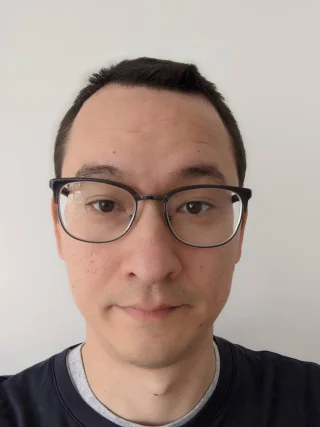
Prof. Anthony Lee
University of Bristol
Brief bioHide brief bio
Anthony Lee holds the Heilbronn Chair in Data Science at the University of Bristol. He studies the theory and methodology of stochastic algorithms for data analysis, including Markov chain and sequential Monte Carlo.
Talk title & abstractHide talk title & abstract
Monte Carlo, reproducing kernels and neural networks: explicit integral representations and quantitative bounds for two-layer ReLU networks
An approach to construct explicit integral representations for two-layer ReLU networks is presented, which provides relatively simple representations for functions in the reproducing kernel Hilbert space with reproducing kernel K(x,y) = exp(⟨x,y⟩). Quantitative bounds demonstrate that functions can be approximated with errors that do not depend explicitly on dimension or degree, but rather the coefficients of their monomial expansions and the “data” distribution over inputs to the function. One perspective is that one can represent the function in this relatively standard RKHS, while Monte Carlo is used to approximate the representation using an activation function, inner products and biases, and an optimal change of measure is used to produce a good distribution for random ReLU networks.

Invited speaker
Prof. Benedict Leimkuhler
University of Edinburgh
Brief bioHide brief bio
Benedict Leimkuhler is a Professor of Applied Mathematics at the University of Edinburgh. He develops numerical methods for molecular dynamics, stochastic differential equations and statistical sampling, connecting numerical analysis, probability and statistical physics.
Talk title & abstractHide talk title & abstract
Position-adaptive Langevin
I will discuss the design of Langevin sampling algorithms based on using a projected position-dependent friction as a type of preconditioner. I will show with several numerical studies that this approach can accelerate convergence while also improving accuracy and overall robustness. I will also discuss the combination of position-adaptive Langevin with variable stepsizes implemented using the SamAdams framework.
Joint work with Peter Whalley.

Invited speaker
Dr. Samuel Livingstone
University College London
Brief bioHide brief bio
Samuel Livingstone is an Associate Professor at University College London. He uses probability and mathematical analysis to study statistical and machine learning algorithms, particularly Markov chain Monte Carlo, and develops probabilistic models for healthcare.
Talk title & abstractHide talk title & abstract
Skew-symmetric numerical schemes for stochastic differential equations: strong convergence and multi-level extension
I will discuss recent work fusing together two strands of the applied mathematics and statistics literature, one concerned with developing flexible probability distributions for data that rely on a small number of parameters, and another concerned with developing numerical integration schemes to simulate stochastic processes. The specific case that I will focus on uses the skew-symmetric family of probability distributions introduced by Adelchi Azzalini and co-authors to approximate the transition kernels of diffusion processes over small time steps, producing alternative numerical schemes to the classical Euler–Maruyama approach. Applying the scheme to the overdamped Langevin diffusion leads to an unadjusted version of the Barker proposal Metropolis–Hastings algorithm. In earlier work weak accuracy was established over finite and infinite time scales, crucially without needing a globally Lipschitz assumption on the drift of the stochastic differential equation. I will review this and then discuss more recent work establishing strong convergence in the mean-squared sense using a novel coupling between the numerical and exact processes. This also enables the development of a multi-level Monte Carlo scheme, which I will discuss the merits of with particular focus on the superlinear drift case, as compared to Euler and Tamed Euler alternatives.
Joint work with Yuga Iguchi, Giorgos Vasdekis and Rui-Yang Zhang.
Invited speaker
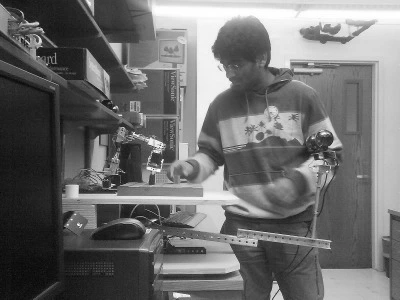
Dr. Siddharth Narayanaswamy
University of Edinburgh
Brief bioHide brief bio
Siddharth Narayanaswamy is a Reader in Explainable AI at the University of Edinburgh, where he leads ExLab. He studies structured representations and human-machine interaction to build robust, generalisable and interpretable AI systems.
Talk title & abstractHide talk title & abstract
Can LLMs talk in MCMC?
LLMs are great for language modelling. Their core competence is really sequence to sequence modelling. Prompt sequence goes in, task relevant sequence comes out. Here, I will discuss some preliminary work on leveraging this core competence for probabilistic inference. Model, data, and states go in and transformed states come out. How well does this work? Can we actually do interesting things with it?
Invited speaker
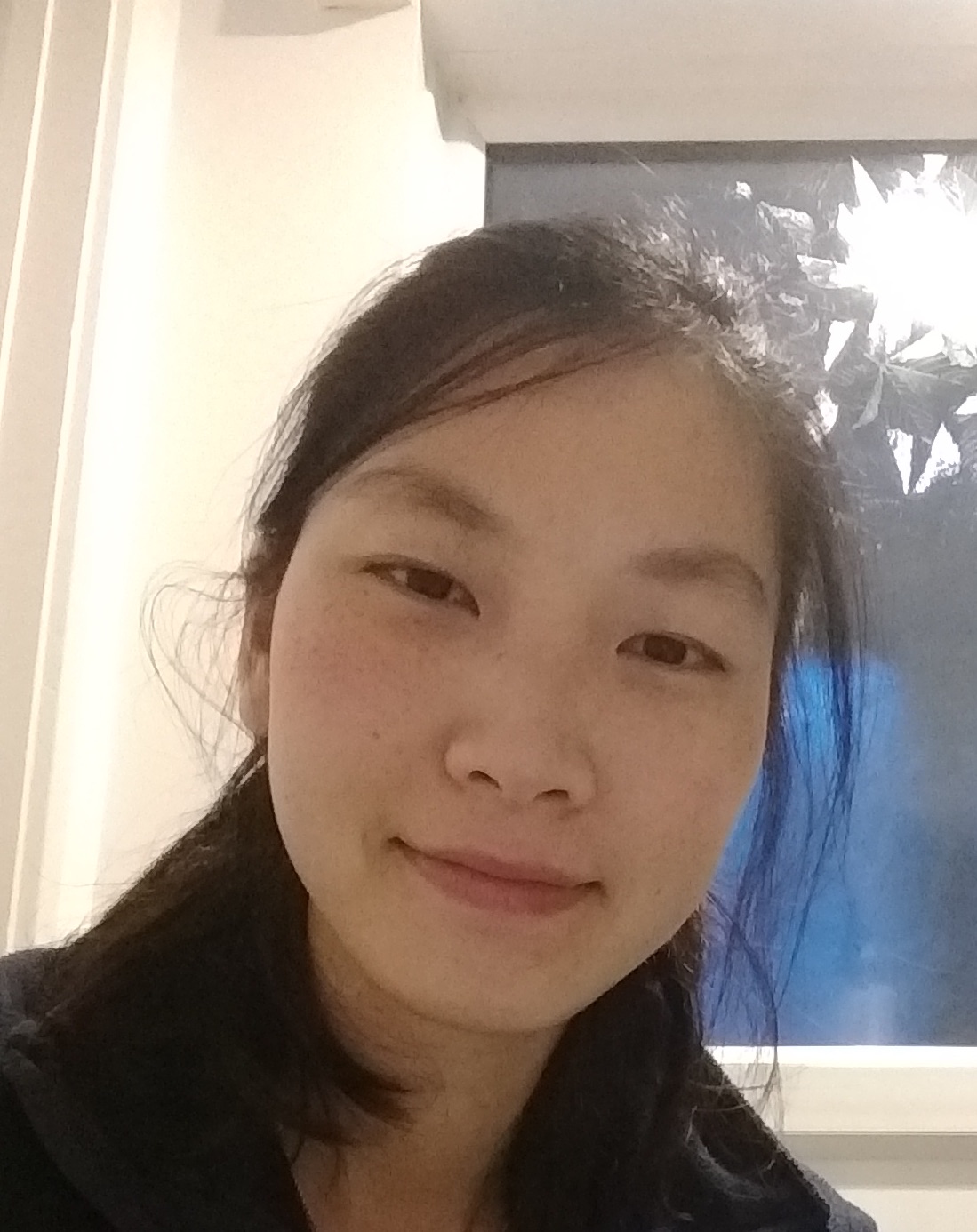
Dr. Clarice Poon
University of Warwick
Brief bioHide brief bio
Clarice Poon is a Reader in the Mathematics Institute at the University of Warwick. Her research focuses on sparse estimation and structured optimisation, including methods for non-smooth optimisation problems.
Talk title & abstractHide talk title & abstract
Inverse optimal transport
In this talk, I will discuss a particular inverse problem arising from Optimal transport (OT). OT is now a central modeling tool to compare and couple probability distributions, with applications spanning economics, imaging, generative modeling, and computational biology. In many modern pipelines, however, the transport cost is not known a priori and must be inferred from data. This leads to inverse optimal transport (iOT): recover the ground cost (or metric parameters) from an observed optimal coupling. On the other hand, modern computational pipelines typically exploit an entropic regularization variant (eOT) of OT. I will discuss iOT in a regime that is both mathematically delicate and practically unavoidable: the entropic regularization level is small (approaching the unregularized OT model), while the coupling is observed through a finite number of samples. I will discuss well-posedness of this inverse problem as well as present conditions where iOT has statistically efficient bounds.
Invited speaker
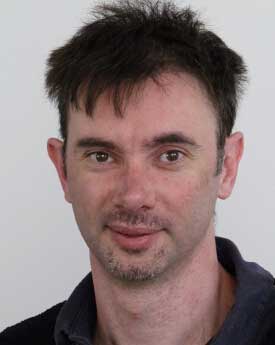
Prof. Chris Sherlock
Lancaster University
Brief bioHide brief bio
Chris Sherlock is a Professor of Statistics at Lancaster University. He studies Markov chain Monte Carlo, particle filters and inference for stochastic processes, with applications in ecology, epidemiology and the environment.
Talk title & abstractHide talk title & abstract
Robust, partially alive particle Metropolis-Hastings via the Frankenfilter
When a hidden Markov model permits the conditional likelihood of an observation given the hidden process to be zero, all particle simulations from one observation time to the next could produce zeros. If so, the filtering distribution cannot be estimated and the estimated parameter likelihood is zero. The alive particle filter addresses this by simulating a random number of particles for each inter-observation interval, stopping after a target number of non-zero conditional likelihoods. For outlying observations or poor parameter values, a non-zero result can be extremely unlikely, and computational costs prohibitive. We introduce the Frankenfilter, a principled, partially alive particle filter that targets a user-defined amount of success whilst fixing lower and upper bounds on the number of simulations. The Frankenfilter produces unbiased estimators of the likelihood, suitable for pseudo-marginal Metropolis–Hastings (PMMH). We demonstrate that PMMH with the Frankenfilter is more robust to outliers and mis-specified initial parameter values than PMMH using standard particle filters, and is typically at least 2–3 times more efficient. We also provide advice for choosing the amount of success. In the case of n exact observations, this is particularly simple: target n successes.

Invited speaker
Dr. Tim Sullivan
University of Warwick
Brief bioHide brief bio
Tim Sullivan is a Reader in Predictive Modelling at the University of Warwick. His research spans uncertainty quantification, inverse problems, probabilistic numerics and mathematical data science.
Talk title & abstractHide talk title & abstract
Autoencoders in function space
High-resolution approximations of functional data arise frequently in scientific computing. While discretisation makes problems finite dimensional, designing algorithms in function space first enables smooth operation between resolutions. We propose function-space versions of autoencoders—machine-learning methods for dimension reduction and generative modelling—in both their deterministic (FAE) and variational (FVAE) forms. This enables training and evaluation on data discretised at arbitrary resolutions, and unlocks new applications such as inpainting, superresolution, and generative modelling. We demonstrate this on scientific data sets, including data from Navier–Stokes fluid flow simulations.
Joint work with Justin Bunker and Mark Girolami (Cambridge), Hefin Lambley (Warwick), and Andrew M. Stuart (Caltech).

Spotlight (Day 1) and poster
Xinyi Wu
Senior Research Associate, Lancaster University

Spotlight talk (Day 1)
Ben Cardoen
Research Fellow, University of Birmingham

Spotlight (Day 1) and poster
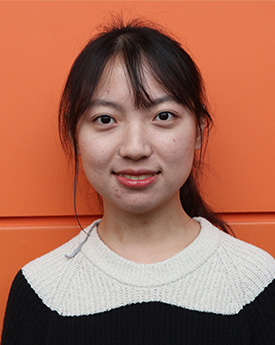
Geyu Ji
PhD student, University of Warwick
Spotlight (Day 1) and poster
Lanya Yang
PhD student, Lancaster University
Spotlight (Day 1) and poster
Xiaoyu Jiang
PhD student, University of Manchester
Spotlight talk (Day 1)
Shreya Sinha Roy
Research Associate, Lancaster University
Spotlight talk (Day 2)
Mengna Li
PhD student, University of Birmingham
Spotlight (Day 2) and poster
Yuxin Liu
PhD student, University College London

Spotlight talk (Day 2)
Cassandra Durr
PhD student, Lancaster University
Spotlight (Day 2) and poster
Bohan Zhan
PhD student, University of Birmingham

Spotlight (Day 2) and poster
Alin Morariu
Senior Research Associate, Lancaster University

Spotlight (Day 2) and poster
Rui-Yang Zhang
PhD student, Lancaster University
Poster presentation
Dibyakanti Kumar
PhD student, University of Manchester

Poster presentation
Luke Hardcastle
Research Associate, MRC Biostatistics Unit, University of Cambridge

Poster presentation
Joe Marsh Rossney
Research Software Engineer, UK Centre for Ecology & Hydrology
Poster presentation
Stephen Mander
Senior Research Associate, Lancaster University
Poster presentation
Peiyi Zhou
PhD student, University College London
Poster presentation
Mohamed Ibrahim Abdi
National Taiwan University of Science and Technology, Taiwan

Poster presentation
Congye Wang
Senior Research Associate, Lancaster University
Poster presentation
Arina Pambukyan
Computer Science graduate, American University of Armenia